


-RGB.1708361192.png)
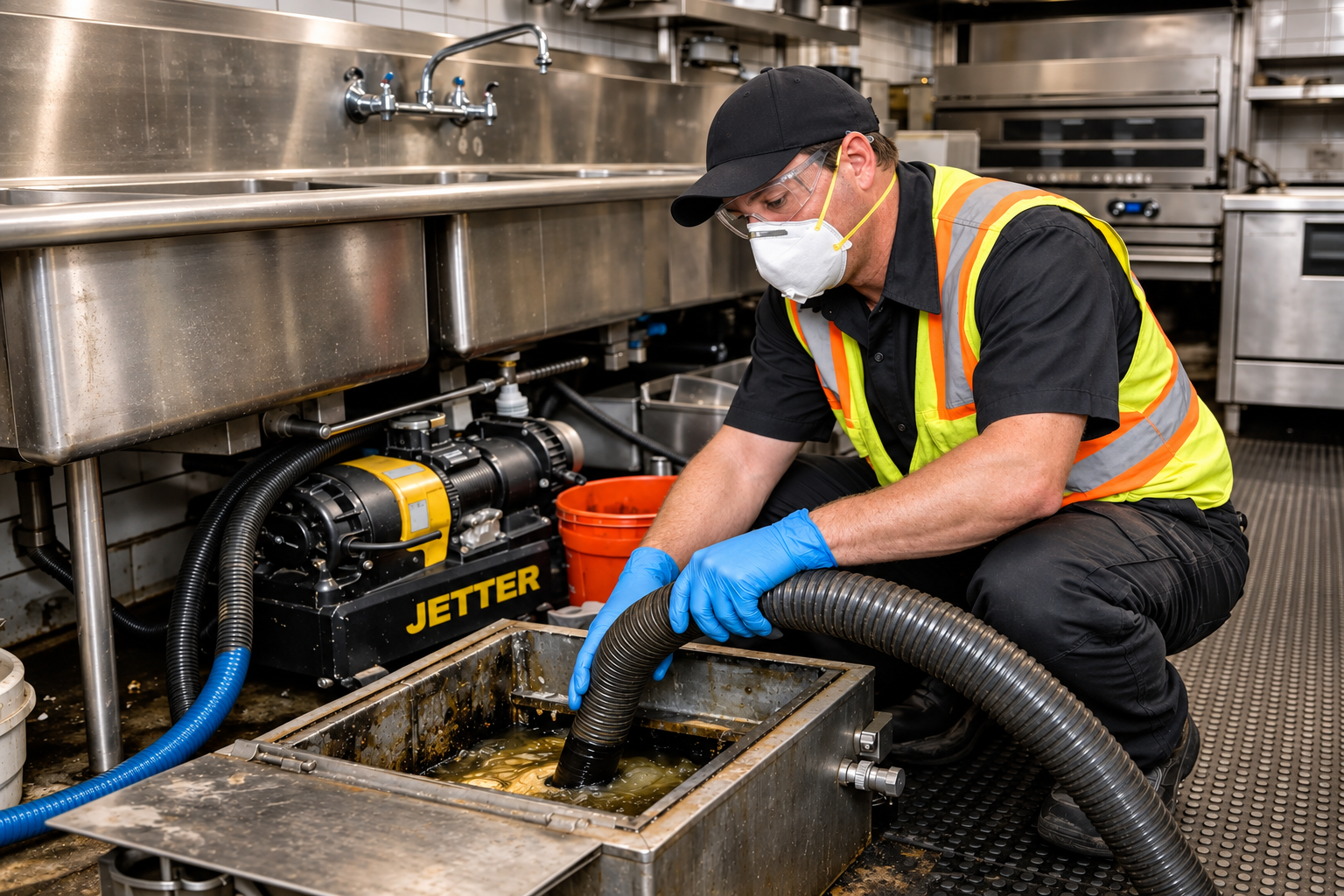
Grease Trap Maintenance for Commercial Kitchens
If your kitchen sinks are draining slowly, or there's a smell that won't go away, your grease trap is probably close to full.
A grease trap catches fat, oil and grease (FOG) before it reaches your pipework. When it's not emptied often enough, that grease hardens and builds up — leading to blocked sinks, bad odours, slow drains, and sometimes a full kitchen shutdown at the worst possible time.
Below, we'll cover what a grease trap actually does, the warning signs it needs emptying, what to do if you already have a blockage, and how to stop it happening again.
Need help right now? Call us on 0203 870 1067 — we offer 24/7 emergency response for grease-related blockages.
What is a grease trap?
A grease trap (sometimes called a grease interceptor, depending on size and application) is a device installed on kitchen waste lines to capture fats, oils and grease before they enter the drainage system.
It works by slowing the flow of wastewater so FOG can float to the top while heavier food solids settle. Cleaner water then exits to the drain. Over time, the trapped grease and solids build up and must be removed.
In simple terms: a grease trap is there to protect your pipework, prevent blockages and reduce the risk of pollution incidents.
Why grease traps matter (and what happens when they fail)
When grease traps aren’t maintained, FOG can pass into the drainage system and cause:
- Blocked sinks, dishwashers and floor drains
- Kitchen downtime and loss of service
- Foul odours and hygiene issues
- Overflows that create slip hazards and contamination risks
- Drainage back-ups that can affect neighbouring units (especially in multi-tenant sites)
- Increased emergency call-outs and higher reactive costs
For hospitality businesses, the biggest impact is usually operational: you can’t run a kitchen properly with slow drainage, odours or repeated blockages.
Grease trap servicing requirements in the UK
There isn’t one single “grease trap law” that applies identically to every site, but commercial kitchens are expected to manage FOG responsibly.
In practice, that means:
- Grease traps must be maintained so they function correctly
- Waste must be removed and disposed of via licensed waste carriers
- Sites should be able to evidence servicing (especially where landlords, facilities managers or auditors require it)
A sensible approach is to treat grease trap maintenance as part of your planned preventative maintenance (PPM) programme. This reduces emergency incidents and helps demonstrate good housekeeping.
If you manage multiple sites, standardising service intervals and record-keeping across the estate makes a noticeable difference.
Warning signs your grease trap needs emptying
If you spot any of the below, it’s usually time to book a service:
- Persistent bad smells around sinks, gulleys or the grease trap location
- Slow draining sinks or dishwashers
- Gurgling sounds in pipework
- Frequent minor blockages that keep returning
- Grease trap visibly full (grease layer and solids build-up)
- Overflowing or leaking grease trap
- Staff reporting “it always blocks on busy shifts”
Tip: if you’re only servicing after you get a blockage, you’re already paying the reactive premium. Planned emptying is almost always cheaper than emergency attendance plus disruption.
What to do if you have a grease-related blockage or overflow
If you have an active blockage or overflow, act quickly to minimise downtime and prevent contamination.
- Make the area safe — stop using affected sinks/appliances, put out wet floor signs, isolate the area if there's spillage
- Prevent more FOG entering the system — don't pour boiling water or chemicals down the drain, avoid quick fixes that only move the blockage
- Call drainage professionals — we'll find the restriction, clear it (usually by jetting), and treat the root cause
- Arrange waste removal and documentation — if the grease trap needs emptying, the waste is removed and disposed of with the right paperwork
At ICE Drainage, we can attend for emergency unblocking and follow up with grease trap emptying and a preventative plan so it doesn’t keep happening.
How to prevent FOG problems
The best results come from combining good kitchen practices with a planned maintenance schedule.
Implement a planned emptying schedule Service frequency depends on covers, menu type and kitchen output, but the goal is simple: don’t let the trap reach a point where grease is passing through.
Train staff on FOG best practice
- Scrape plates and cookware into food waste before washing
- Use sink strainers to reduce solids entering the line
- Never pour cooking oil down sinks
- Store waste oil in appropriate containers for collection
Keep internal pipework clean Even with a grease trap, some residue can build up over time. Periodic internal pipework cleaning helps prevent restrictions.
Use a PPM approach (especially for multi-site hospitality) A structured maintenance plan can include:
- Grease trap servicing and emptying
- Kitchen drainage cleaning
- Reactive call-out response times
- Service reports and photographic evidence
- Digital records for audits and landlords
If you'd rather not manage this in-house, our Planned Restaurant Drainage Maintenance service covers all of this on a scheduled contract, so you're never relying on someone remembering to book it.
Contact us today
ICE Drainage provides grease trap emptying, cleaning and planned maintenance for hospitality sites, plus 24/7 emergency drainage response.
To book a service or request urgent support, contact our team on 0203 870 1067 or contactus@icedrainage.co.uk

Speak with me today,
I’m here to help
By asking you a few questions either via phone or email I can immediately provide a realistic estimation of the cost.
You’re in good company. We’ve worked with the following commercial clients… View all


















Why choose us?
- Cater to a wide variety of drainage situations
- Nationwide coverage, available 24/7
- Cater to commercial and domestic clients
- Free survey provided prior to quotation
- Emergency response team
- Offer a bespoke service designed to suit all your needs
- All technicians hold professional health and safety qualifications