Grease Separator Installation
Grease separator installation is one of the most effective ways to prevent fat, oil and grease (FOG) from entering your drainage system — and one of the quickest ways to reduce the risk of blocked drains, foul odours, kitchen downtime and environmental non-compliance.
At ICE Drainage, we design and install grease separators for restaurants, hotels, pubs, cafés, food production units, staff canteens and multi-tenant commercial buildings. Whether you need a new installation for a fit-out, a replacement for an undersized unit, or a compliant upgrade to support a facilities management contract, we deliver a practical solution with minimal disruption.
Call ICE Drainage on [PHONE] or email contactus@icedrainage.co.uk to book a site survey and quotation.
Grease separator installation for commercial kitchens
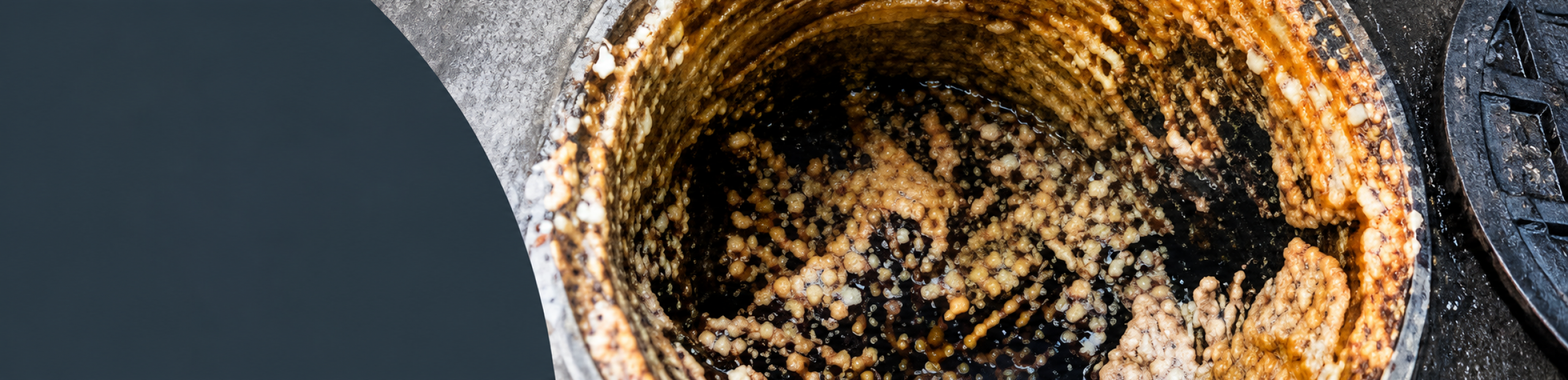
FOG is a leading cause of internal and external drainage blockages in hospitality. Even well-run kitchens generate grease from pot washing, dishwashers, combi ovens, floor wash-down and cleaning routines. Without effective separation, that grease cools, congeals and sticks to pipework — creating restrictions that eventually become a full blockage.
A correctly specified grease separator helps you:
- Reduce emergency call-outs for blocked drains
- Protect internal pipework, stack lines and underground drainage
- Improve hygiene and reduce odours around waste areas
- Support compliance and reduce the risk of pollution incidents
- Extend the life of your drainage assets
If you’ve had repeat FOG issues, frequent jetting, or recurring kitchen drainage smells, installation (or replacement) is often the long-term fix.
What is a grease separator?
A grease separator (often called a grease trap or grease interceptor) is a unit installed on kitchen wastewater lines to separate fats, oils and grease from the flow before it enters the main drainage system.
In simple terms, it slows the wastewater down so that:
- Grease and oils float to the surface
- Food solids settle to the bottom
- Cleaner water exits to the drain
The captured grease and solids must then be removed as part of a planned maintenance routine.
When do you need a grease separator installed?
You may need grease separator installation if:
- You’re opening a new food premises or completing a kitchen fit-out
- Your landlord, managing agent or FM provider requires FOG control
- You’ve had repeated blockages linked to grease build-up
- Your current unit is too small, poorly located or frequently overflows
- You’re upgrading to meet best practice or insurer requirements
- You’re expanding kitchen capacity (more covers, more equipment, longer service)
If you’re unsure, we can assess your kitchen layout, waste lines and usage patterns and recommend the right approach.
Our grease separator installation service
We provide an end-to-end installation service, from survey and specification through to commissioning.
1) Site survey & assessment
We start with a practical site survey to understand:
- Kitchen layout and available space
- Existing pipework routes and access points
- Peak usage times and likely FOG load
- Whether the separator should be internal, external, or underground
- Access for emptying and servicing
- Any constraints (noise, odour control, working hours, tenant requirements)
2) Specification & sizing
Correct sizing is crucial. An undersized unit will fill quickly, cause odours and overflow risk; an oversized unit can be impractical and costly.
We specify a grease separator based on:
- Type of premises and food preparation
- Number of covers / meals served
- Dishwashing and pot-wash volumes
- Kitchen equipment producing greasy effluent
- Space and access limitations
Where needed, we’ll also advise on pre-screening, solids management and best-practice kitchen procedures to reduce FOG at source.
3) Installation & pipework integration
Our engineers install the unit and connect it correctly into your kitchen drainage line, including:
- Pipework modifications and rerouting (where required)
- Isolation valves / access points for servicing
- Venting and odour control considerations
- Testing for leaks and correct flow
We work cleanly and safely, and we can plan works around service times to minimise downtime.
4) Commissioning & handover
Once installed, we:
- Test performance and confirm correct operation
- Provide a handover explaining how the unit works
- Advise on emptying frequency and maintenance schedules
- Provide service documentation suitable for FM records
Need installation fast? Call [PHONE] — we can prioritise urgent hospitality projects and refurbishments.
Internal vs external grease separators
The right location depends on your building, kitchen layout and servicing access.
Internal grease separators
Installed within the kitchen or adjacent service area.
Best for:
- Smaller kitchens with accessible service areas
- Sites where external excavation is not possible
- Fit-outs with planned service cupboards
Considerations:
- Odour control and ventilation
- Access for emptying and cleaning
- Space constraints
External / underground grease separators
Installed outside the building, often in a dedicated chamber.
Best for:
- Larger kitchens and high-volume sites
- Multi-tenant sites where multiple kitchens feed a shared line
- Sites needing higher capacity and easier tanker access
Considerations:
- Groundworks and reinstatement
- Traffic management and safe access
- Planning around deliveries and customer areas
We’ll recommend the most practical option for your site and operational needs.
Grease separator replacement & upgrades
If you already have a grease separator but still experience FOG issues, it may be:
- Undersized for your current kitchen output
- Installed too far from the source (allowing grease to cool in pipework first)
- Poorly maintained due to difficult access
- Damaged, leaking, or incorrectly configured
We can replace or upgrade existing separators and improve the surrounding pipework to reduce future problems.
Planned maintenance after installation (PPM)
A grease separator is only effective if it’s maintained. We can support you with a planned service schedule, including:
- Routine emptying and cleaning
- Condition checks and performance assessment
- Advice on reducing FOG loading
- Reporting and photographic evidence for compliance
This is particularly useful for facilities management and multi-site hospitality groups that need consistent standards and auditable records.
Ask about our maintenance options when you book your installation survey.
Common problems we help prevent
A correctly installed and maintained grease separator helps reduce:
- Blocked sinks, floor drains and dishwashers
- Slow draining and recurring internal backups
- Foul odours in kitchens and waste areas
- Grease build-up in underground lines
- Emergency closures due to drainage failures
- Pollution risk from grease discharge
If you’re dealing with repeated issues, we can also carry out investigations (including CCTV surveys where appropriate) to confirm the cause and recommend a permanent fix.
Why choose ICE Drainage?
Hospitality sites need a drainage partner that understands service pressure, compliance expectations and the cost of downtime. We’re set up to deliver:
- Commercial-first approach for kitchens, hotels, pubs and restaurants
- Emergency response capability if you need urgent support
- Planned works for refurbishments, fit-outs and upgrades
- Clear reporting suitable for facilities management records
- Engineers trained to work safely and professionally on live sites
We also support wider drainage services, so if your site needs jetting, descaling, pipework cleaning, pump station support or reactive call-outs, you can manage it with one contractor.
Grease separator installation FAQs
How often does a grease separator need emptying?
It depends on kitchen volume and the unit size. High-volume kitchens may require frequent servicing, while smaller sites may be less often. We’ll advise a realistic schedule based on your operation.
Will installation disrupt kitchen service?
We plan works to minimise disruption. Some installations can be completed out of hours or in phases. During the survey we’ll confirm the best approach.
Is a grease separator the same as a grease trap?
The terms are often used interchangeably. In practice, “grease separator” is commonly used for compliant, correctly sized units installed as part of a commercial drainage system.
Can you install grease separators for multi-site groups?
Yes. We can standardise specifications across multiple locations and provide consistent reporting and maintenance support.
Book a grease separator installation survey
If you need a grease separator installed, replaced or upgraded, we’ll help you choose a practical, compliant solution that protects your drainage system and reduces call-outs.
Call ICE Drainage on [PHONE] or email contactus@icedrainage.co.uk to arrange a site survey and quotation.
Speak with me today,
I’m here to help
By asking you a few questions either via phone or email I can immediately provide a realistic estimation of the cost.
Emergency Hotline
0203 376 4801
Helpline open 24 hours a day, 7 days a week
When calling please have
the following ready:
- Your Name
- Company Name (if applicable)
- Site Postcode
- The problem you're having
- Email Address
Get a Quote
You’re in good company. We’ve worked for the following commercial clients… View all

Why choose us?
- Cater to a wide variety of drainage situations
- Nationwide coverage, available 24/7
- Cater to commercial and domestic clients
- Free survey provided prior to quotation
- Emergency response team
- Offer a bespoke service designed to suit all your needs
- All technicians hold professional health and safety qualifications
We’re fully accredited
We place best practise, professional expertise and health and safety at the core of our business. We’re fully compliant with all legal obligations. You can view a list of our accreditations below, or visit our Health & Safety page for more information.