


Petrol and Oil Interceptors Explained: Bypass vs Full Retention
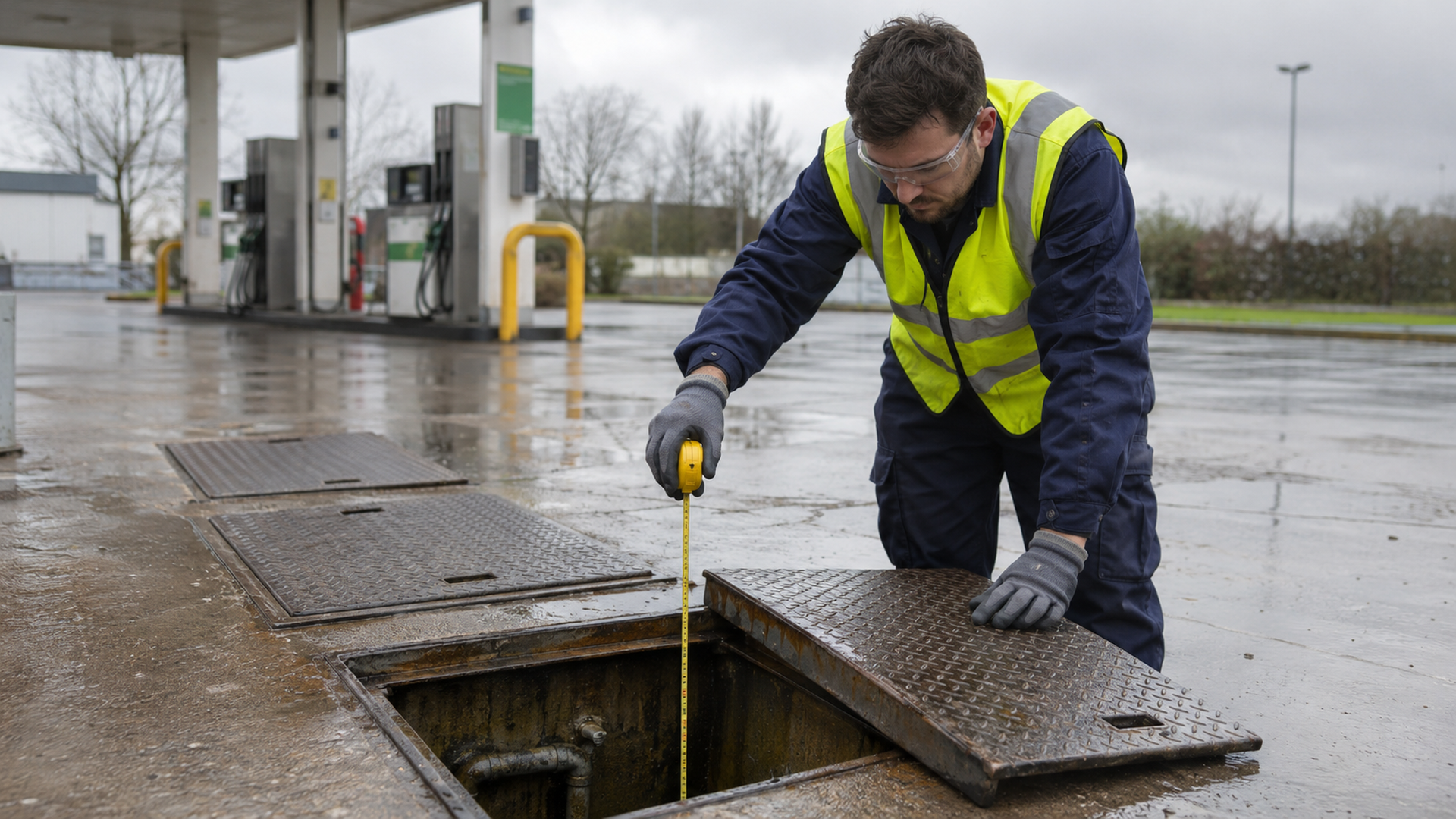
If you manage a forecourt, car park, depot or car wash, there's a good chance you have a petrol interceptor. Most people only find out when it overflows, an alarm goes off or someone asks for the service records.
This guide explains what an interceptor does, the main types, and how to keep yours working and compliant.
What is a petrol interceptor?
A petrol interceptor (also called an oil interceptor or oil separator) is an underground tank. Rainwater and run-off from your site flow through it before they reach the drain, sewer or river.
Oil and fuel are lighter than water, so they float. Silt and grit are heavier, so they sink. The tank holds back both and lets the cleaner water out.
Without one, every fuel spill, oil leak and wash-down would go straight into the drainage system.
Bypass vs full retention: what's the difference?
This is the question we get asked most. It comes down to how much water the interceptor treats.
Full retention separators
A full retention separator treats all the water that flows into it, up to the most it was built to handle.
You'll usually find them where spills are likely or the risk is higher. Think fuel forecourts, vehicle depots, scrap yards and sites where vehicles are serviced or refuelled.
Bypass separators
A bypass separator treats the first, dirtiest flush of rainwater. That first flush carries most of the oil off the ground. In very heavy rain, the extra water flows round the treatment part and out.
They're often used on car parks and roads, where the risk is small, everyday drips rather than big spills.
Which one do you have?
Check your site drawings or the maker's plate on the access cover. If you can't find either, we can identify it on a survey. It's worth knowing, because the two types are serviced differently.
Class 1 vs Class 2
You might also see "Class 1" or "Class 2" on your paperwork. This is about how clean the water is when it leaves.
- Class 1 separators are built to a tighter standard. The outflow should hold no more than 5 mg of oil per litre. These are often used where water goes to surface water drains or a watercourse.
- Class 2 separators allow up to 100 mg of oil per litre. These are more often used where water goes to a foul sewer.
The class is part of the design. You can't turn a Class 2 into a Class 1 by servicing it more often.
Signs your interceptor needs attention
- An alarm is sounding, or the alarm light is on
- Oil sheen in gullies, drains or nearby water
- A smell of fuel or diesel around the covers
- Slow drainage or standing water on the site
- The last service was over six months ago, or nobody knows when it was
If you see oil leaving your site, act straight away. Pollution from your site is your responsibility, even if it started with someone else's leaking car.
How often should an interceptor be serviced?
Most makers and industry guides say:
- Service and inspect at least every six months
- Remove silt before the silt chamber gets close to half full
- Empty and fully inspect the whole unit at least every five years
Busy sites, sites with spills and sites with lots of grit and leaves may need more. Always follow your maker's guide if you have it.
A proper service should include:
- Measuring oil and silt levels
- Removing oil and silt as needed
- Checking the inlet, outlet and any coalescer filter
- Testing the alarm
- Checking the chamber for damage or leaks
- Giving you a written record and waste paperwork
Oil and fuel taken out of an interceptor is classed as hazardous waste. It has to be moved by a registered carrier with the right paperwork. Keep those notes. They're your proof the job was done properly.
Our petrol and oil interceptor cleaning and separator servicing cover all of this.
Why the alarm matters
Most modern separators should have a high-level oil alarm. It tells you when the oil layer is getting too deep, before oil escapes.
The trouble is, alarms get forgotten. Batteries die, probes get coated and panels get switched off because they "keep going off". A dead alarm is worse than no alarm, because everyone assumes it's fine.
Test it at every service. If yours is missing or faulty, see our interceptor alarm testing and installation.
What happens if you don't maintain it
An interceptor that's full can't hold back oil. It passes straight through. That can mean:
- Pollution of drains, sewers or rivers
- Enforcement action and clean-up costs
- Blocked site drainage and flooding
- Problems with insurers after an incident
It's far cheaper to empty the tank than to clean up after it. If oil has already escaped, our team can help with hydrocarbon contamination removal.
Forecourts and car washes
Forecourts and car washes deal with fuel, detergents and a lot of grit. Car wash water can also stop a separator working well if the wrong detergents are used. These sites usually need more frequent visits. See our forecourt and car wash drainage maintenance.
Put it on a schedule
The easiest way to stay on top of it is a planned maintenance plan. We visit on a set schedule, record everything and keep your paperwork in order. Read why planned maintenance is cheaper than waiting for a breakdown.
Book an interceptor service
Not sure when yours was last emptied? We'll check it, tell you what you've got and set up a schedule that suits the site. Call 0203 870 1067, email contactus@icedrainage.co.uk or get a quote today.
Related reading: interceptors and separators.
You’re in good company. We’ve worked with the following commercial clients… View all



















Why choose us?
- Cater to a wide variety of drainage situations
- Nationwide coverage, available 24/7
- Cater to commercial and domestic clients
- Free survey provided prior to quotation
- Emergency response team
- Offer a bespoke service designed to suit all your needs
- All technicians hold professional health and safety qualifications