


Build Over Agreements: Can You Build an Extension Over a Drain?
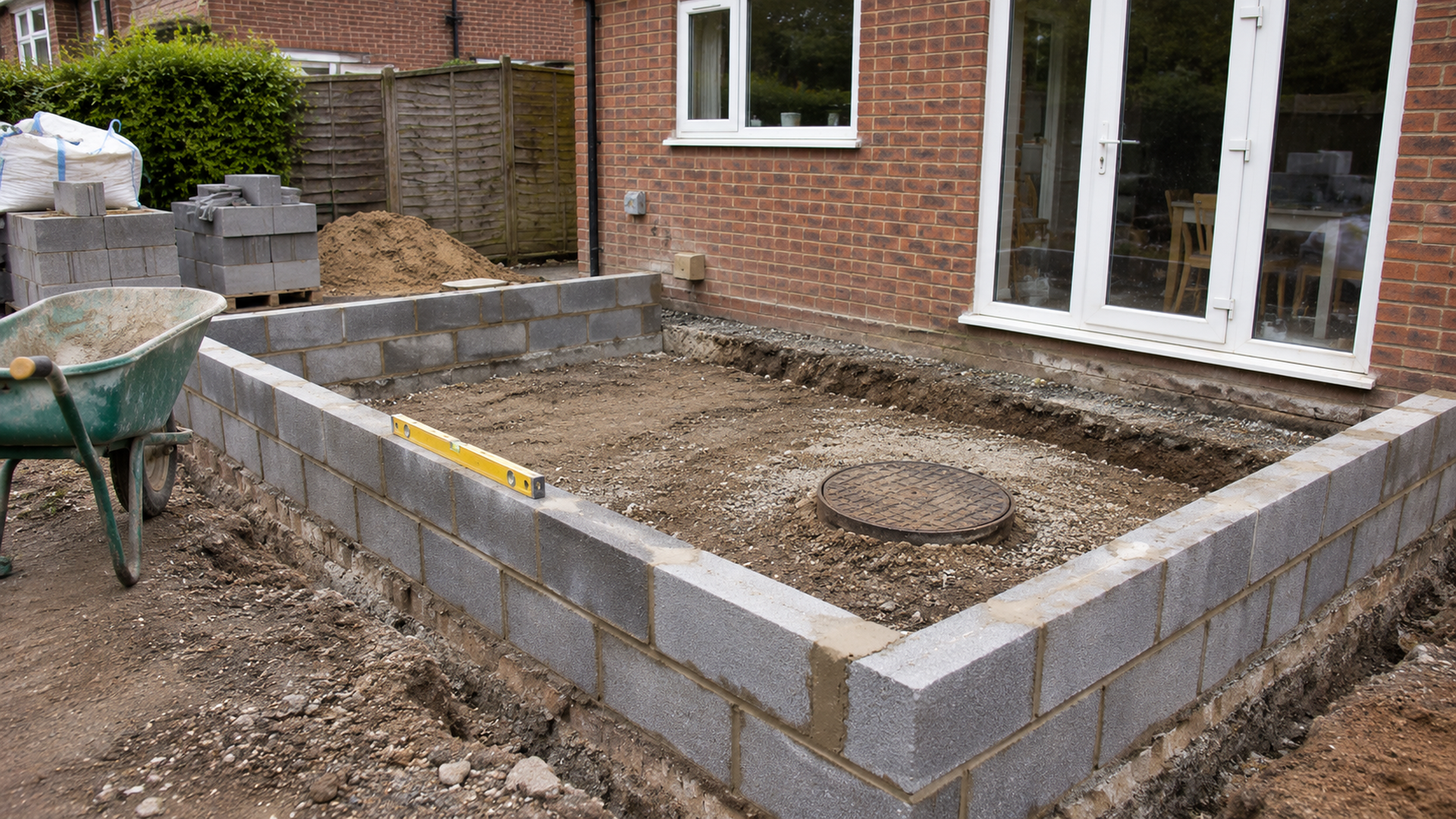
You've got plans for a kitchen extension. The architect's drawn it up. Then someone points at the manhole in the middle of where the new kitchen is going.
It happens all the time. Lots of homes have a shared drain or public sewer running close to the back wall. And if you want to build over it, or near it, you'll probably need permission from your water company first.
That permission is called a build over agreement. Here's what it is, when you need one and how to get through it without holding up the build.
This guide covers England and Wales. Each water company has its own process and fees, so always check theirs before you start.
What is a build over agreement?
It's an agreement between you and your water company. It lets you build over, or close to, a public sewer that they own.
The water company wants to know two things:
- Your building won't damage the sewer.
- They can still get to the sewer to repair it in future.
Why is there a sewer under my garden?
Since 2011, most shared drains and sewers in England and Wales belong to the water company. That includes pipes that serve your house and a neighbour's, even if they run through your garden.
So the drain you think is yours might not be. If it serves more than one property, it's probably a public sewer.
When do you need one?
Usually, if you're building:
- Over a public sewer, or
- Within 3 metres of one
That 3 metres is normally measured from the nearest part of the building, including the foundations, to the centre of the pipe.
It applies to extensions, conservatories, garages and other building work that needs Building Regulations approval. Building Control will usually check with the water company.
What can't be built over?
Some pipes can't be built over at all, or only in special cases. These often include:
- Larger sewers
- Deep sewers
- Pressurised pipes (rising mains) from pump stations
- Manholes, unless they're moved
Your water company will tell you what applies to your pipe. Sometimes the answer is to move the sewer, which is a bigger job and needs its own approval.
Where CCTV drain surveys come in
Most water companies ask for CCTV surveys as part of the agreement. There are usually two.
Before you build. This records the condition of the sewer before work starts. It also confirms exactly where the pipe runs and how deep it is. If the pipe is already damaged, it's better to know now, because otherwise you might be blamed later.
After you build. This shows the sewer wasn't damaged during the work. Water companies usually need this before they give final sign-off. If the survey shows damage, you'll normally be asked to pay for the repair.
The surveys must be done to the standard your water company asks for. Our build over CCTV drain surveys are reported in the format water companies expect.
How long does it take?
It varies by company and by how complex the job is. Some water companies aim to give a decision on simple applications within about 10 working days. More complex cases take longer.
The quickest way to slow things down is to send an incomplete application. Have your drawings, site plan and survey ready before you apply.
What happens if you build without one?
Building over or near a public sewer without permission can cause real problems:
- The water company can ask you to remove or change the work
- If they need to dig up the sewer, they may not have to put your extension back
- It can hold up the sale of your house later, when a buyer's solicitor asks
- Any damage to the sewer is likely to be your cost
Some companies offer a retrospective route if you've already built. It's usually slower and harder than doing it first.
How to avoid delays
- Find out where the drains run first. Check before the plans are final. Drain mapping and tracing shows exactly where pipes go.
- Check who owns the pipe. Your water company's sewer map is a good start, but older maps aren't always right.
- Book the pre-build survey early. Don't leave it until the builders are on site.
- Talk to your architect and builder about the sewer. Foundations near a pipe may need to go deeper.
- Plan the post-build survey. Book it in as soon as the build is close to finishing.
Building near a private drain
If the drain only serves your house, it's private. You won't need a water company agreement, but Building Control will still want the drain protected. That might mean moving it, adding access or lining it before you build. A CCTV drain survey will show what condition it's in.
Book your build over survey
Planning an extension? Get the drains surveyed before the plans are fixed. Call 0203 870 1067, email contactus@icedrainage.co.uk or get a quote today. We start with a free site survey.
Related reading: CCTV drain survey cost and CCTV drain surveys.
You’re in good company. We’ve worked with the following commercial clients… View all



















Why choose us?
- Cater to a wide variety of drainage situations
- Nationwide coverage, available 24/7
- Cater to commercial and domestic clients
- Free survey provided prior to quotation
- Emergency response team
- Offer a bespoke service designed to suit all your needs
- All technicians hold professional health and safety qualifications